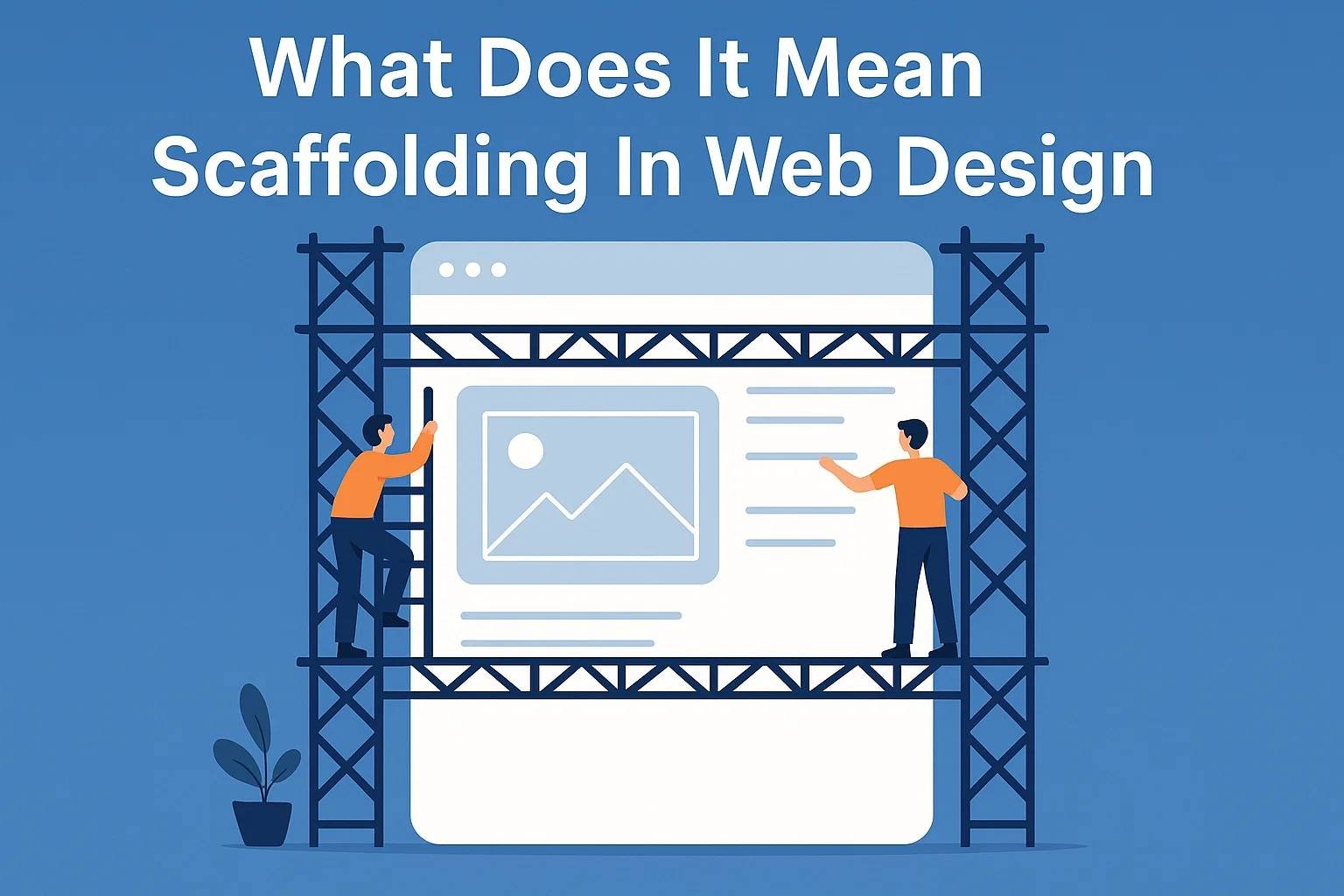
Scaffolding in web design is the first step to take before diving into the intricate details of designing, developing, and structuring the website. Think of it like this: when drawing something, you’d start by sketching the outline, right?
If you draw one object and wait until you're done coloring and designing, it’ll take way too long to complete. You might also find the final design hard to follow, since the overall focus becomes fragmented. But sketching first helps to hold the focus while also making faster progress. Okay, let me write some more about what does it mean scaffolding in web design.
It’s the same with scaffolding. Making it easy to guide users’ focus smoothly through your site… presenting the right information at the right time in the right place. Since navigation and content hierarchy are predefined with scaffolding, developer teams find it much easier to work with, and users find it much easier to browse through.
So… no more irritated potential clients, only more and more engagement!
Scaffolding in web design is the blueprint of your site. Something your developer can rely upon to rapidly create the basic infrastructure to achieve the desired output. Results? A website that doesn’t lose focus of the main intent and customers find it fun and easy to browse through.
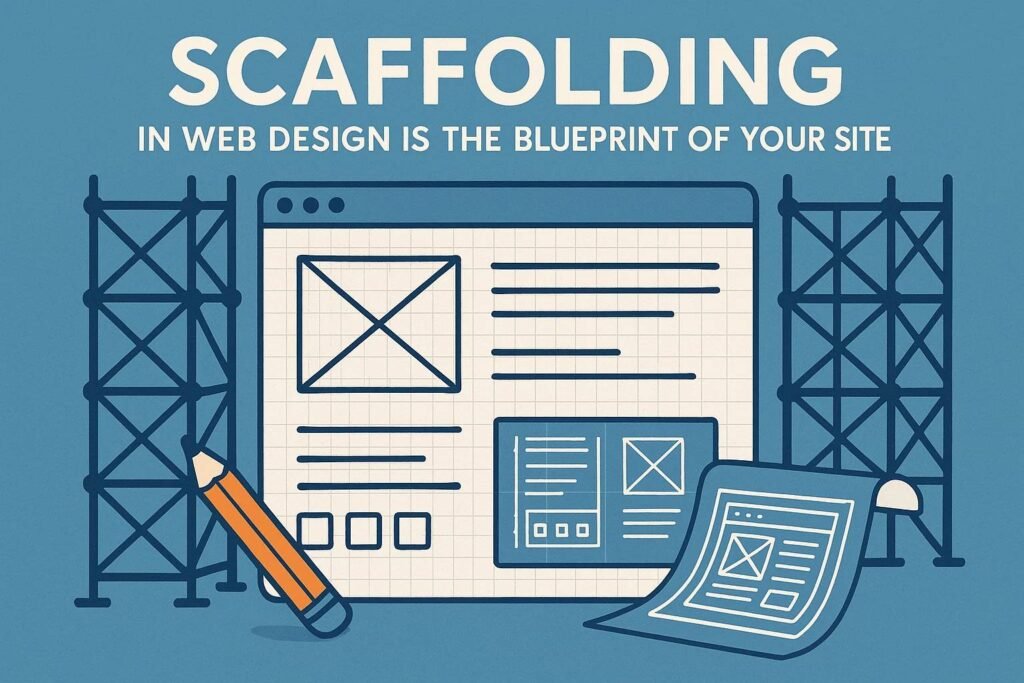
It's a temporary structure that highly affects your website’s simplicity, consistency, prototyping speed, and reusability. And, because of its diverse usefulness, it becomes much easier for you to maintain an organized pattern. So, even if there’s anything wrong, you can take action and resolve it in no time.
Key elements of scaffolding in web design:
Scaffolding matters in modern UI/UX the most. Why? Imagine landing on a webpage that feels like a cluttered desk. What you need is really there, but finding it is such a mess. That's what happens when scaffolding is not at work.
But when scaffolding is at work, many aspects of the overall UI/UX start to improve rapidly. For example, you’ll achieve-
To Hazlflow, Scaffolding at Hazlflow isn't just a technical operation. We take significant consideration since it's the key to all our successful online ventures and client satisfaction. Whether we're working on a profit-building e-commerce site or a non-profit research website, scaffolding allows us to define the structure, streamline workflows, and ensure that every aspect has a well-defined reason.
We’ve faced multiple challenges along the road, and this is how we use scaffolding to provide you with smarter solutions:
So you see… by including scaffolding in every stage of our development cycle, Hazlflow makes sure that every project is not only beautifully developed but also architecturally built with performance, scalability, and findability in mind.
Ready to transform your digital experience? Contact Hazlflow today.
We’ve seen our clients cut bounce rates simply by reorganising their scaffolding. In fact, one client’s e-commerce didn’t have a proper UI/UX strategy, causing poor conversions. But with our scaffolding, we saw their comments going from “Where do I find that?” to “I just bought three things I didn’t even plan to.”
We also helped with a full website redesign for a healthcare website. Since their previous website was outdated, it had quite a few security issues. Nevertheless, Hazlflow took care of all efficiently.
Wanna learn more about our projects and achievements? Make sure to take a look at Hazlflow’s web design case studies.
Scaffolding in web design isn’t about fancy animations or eye-catching graphics—it’s about making sure the bones of the site are strong enough to support a smooth, intuitive experience. Without it, even the prettiest design can leave users confused. Thanks for reading the full article, hopefully you have learned and understand what does it mean scaffolding in web design.
Scaffolding in web design is the first step to take before diving into the intricate details of designing, developing, and structuring the website. Think of it like this: when drawing something, you’d start by sketching the outline, right?
If you draw one object and wait until you’re done coloring and designing, it’ll take way too long to complete. You might also find the final design hard to follow, since the overall focus becomes fragmented. But sketching first helps to hold the focus while also making faster progress. Okay, let me write some more about what does it mean scaffolding in web design.
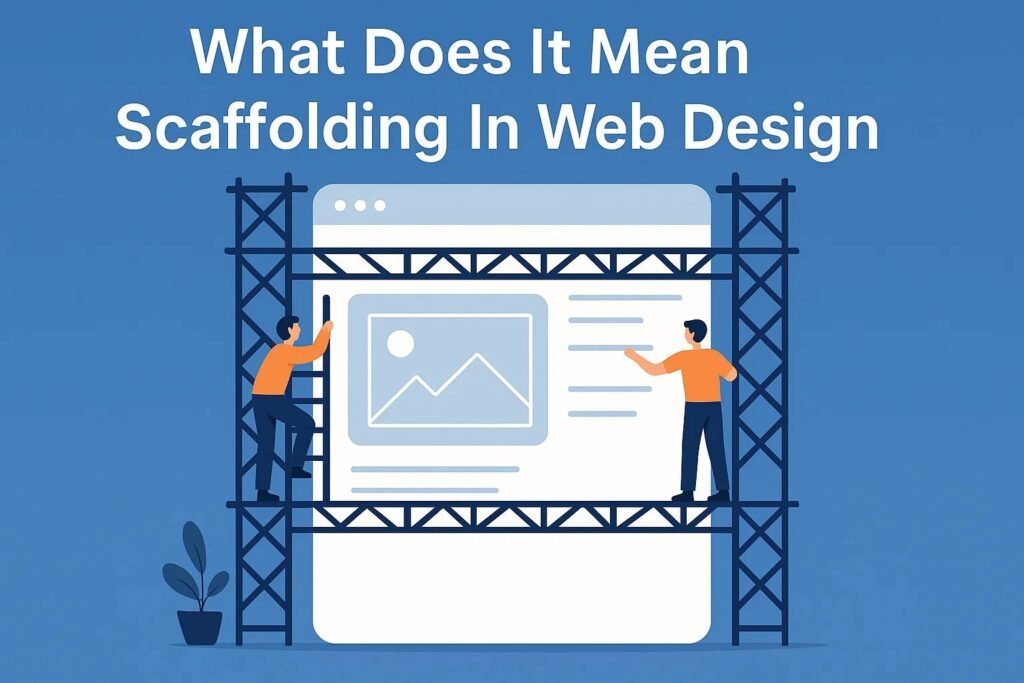
It’s the same with scaffolding. Making it easy to guide users’ focus smoothly through your site… presenting the right information at the right time in the right place. Since navigation and content hierarchy are predefined with scaffolding, developer teams find it much easier to work with, and users find it much easier to browse through.
So… no more irritated potential clients, only more and more engagement!
Scaffolding in web design is the blueprint of your site. Something your developer can rely upon to rapidly create the basic infrastructure to achieve the desired output. Results? A website that doesn’t lose focus of the main intent and customers find it fun and easy to browse through.
It’s a temporary structure that highly affects your website’s simplicity, consistency, prototyping speed, and reusability. And, because of its diverse usefulness, it becomes much easier for you to maintain an organized pattern. So, even if there’s anything wrong, you can take action and resolve it in no time.
Key elements of scaffolding in web design:
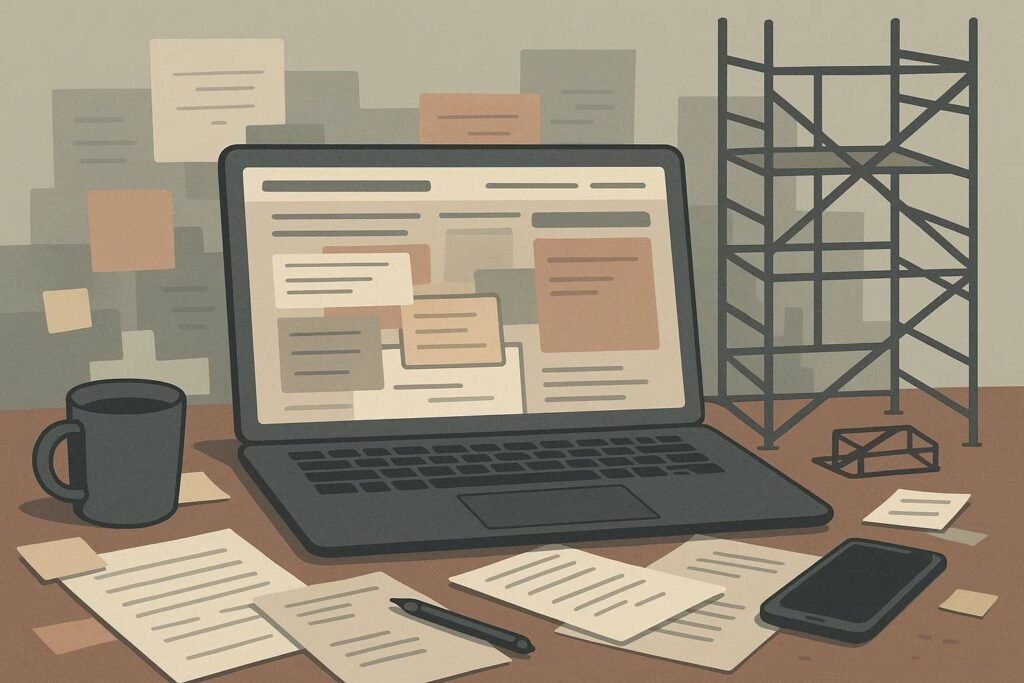
Scaffolding matters in modern UI/UX the most. Why? Imagine landing on a webpage that feels like a cluttered desk. What you need is really there, but finding it is such a mess. That’s what happens when scaffolding is not at work.
But when scaffolding is at work, many aspects of the overall UI/UX start to improve rapidly. For example, you’ll achieve-
To Hazlflow, Scaffolding at Hazlflow isn’t just a technical operation. We take significant consideration since it’s the key to all our successful online ventures and client satisfaction. Whether we’re working on a profit-building e-commerce site or a non-profit research website, scaffolding allows us to define the structure, streamline workflows, and ensure that every aspect has a well-defined reason.
We’ve faced multiple challenges along the road, and this is how we use scaffolding to provide you with smarter solutions:
So you see… by including scaffolding in every stage of our development cycle, Hazlflow makes sure that every project is not only beautifully developed but also architecturally built with performance, scalability, and findability in mind.
Ready to transform your digital experience? Contact Hazlflow today.
We’ve seen our clients cut bounce rates simply by reorganising their scaffolding. In fact, one client’s e-commerce didn’t have a proper UI/UX strategy, causing poor conversions. But with our scaffolding, we saw their comments going from “Where do I find that?” to “I just bought three things I didn’t even plan to.”
We also helped with a full website redesign for a healthcare website. Since their previous website was outdated, it had quite a few security issues. Nevertheless, Hazlflow took care of all efficiently.
Wanna learn more about our projects and achievements? Make sure to take a look at Hazlflow’s web design case studies.
No, scaffolding is not the same as navigation, as it’s just one part of the bigger picture. Navigation links different sections of your website to make it easy for users to move around. Scaffolding, on the other hand, works with the whole site structure.
Yes. A clear hierarchy helps search engines understand your content. And a hierarchy maintained well-structured scaffolding in turns improves crawlability, making it easy for search engines to index your pages with accuracy. It also improves internal linking, which distributes page authority and keeps users engaged longer.
No, scaffolding is not only needed for big sites. It’s a crucial add-on to any site or software, regardless of size. It maintains clarity, consistency, and navigation, making even small sites easier to manage and scale. As a result, even small sites benefit from a clear, consistent framework.
You can tell if your site needs better scaffolding if users often ask, “Where do I find…?” or if you see high bounce rates. Low engagement rate or visitors dropping off before completing a key action can also indicate poor scaffolding.
Many tools help with scaffolding. For example, you can utilize Next.js CLI, Vue CLI, Bootstrap Templates, or Tailwind UI for front-end scaffolding. On the other hand, you may also like to use Laravel Artisan, Django Admin, and Rails Generators for back-end scaffolding.
Yes, scaffolding can change over time to be even more effective than it already is. As your site grows and user needs change, updating the scaffolding makes sure that new features are supported and your goals are met.
Scaffolding in web design isn’t about fancy animations or eye-catching graphics—it’s about making sure the bones of the site are strong enough to support a smooth, intuitive experience. Without it, even the prettiest design can leave users confused. Thanks for reading the full article, hopefully you have learned and understand what does it mean scaffolding in web design.